
Guide · Oct 30, 2026
How to Store Fresh Produce So It Lasts
Which produce goes in the fridge, what stays on the counter, which foods to keep apart and when to wash, with a fridge-life chart for common vegetables and fruit from university extension guides.
By Michael Gonzales · Last updated
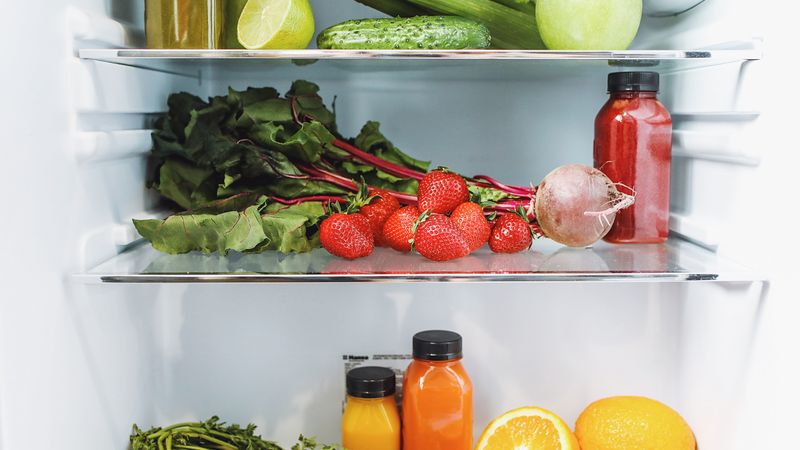
Short answer: Keep your fridge at 40°F or below, refrigerate most vegetables and berries in the crisper, and leave potatoes, sweet potatoes, onions, garlic, whole tomatoes, bananas and winter squash out on the counter or in a cool pantry [1][2][3]. Store produce dry and wash it right before you eat it. Keep ripening fruit away from leafy greens and other vegetables.
That's most of it. The rest of this guide walks through where each kind of produce goes, how long it usually lasts and the small habits that keep a week's groceries from turning into compost by Thursday. If you're planning the shopping list itself, our grocery guides cover what to buy.
What temperature should your fridge be for produce?
The FDA says to store perishable produce, such as strawberries, lettuce, herbs and mushrooms, in a clean refrigerator at 40°F or below, and to check it with a refrigerator thermometer [1]. A cheap thermometer on the middle shelf tells you more than the dial ever will.
Temperatures aren't the same everywhere inside. USDA notes that the back of a fridge runs colder and the front, near the door, runs warmer [2]. Delicate greens can get frost-bitten against the back wall, so give them some space.
Which fruits and vegetables should not be refrigerated?
These keep best at room temperature, away from direct sunlight [2][3][4]:
- Potatoes and sweet potatoes. Store them in a cool, dark, well-ventilated spot. Light turns potatoes green [4][5].
- Dry onions and garlic. Keep them loose in a mesh bag or open basket where air can move [4][5].
- Whole tomatoes. Refrigeration makes ripe tomatoes mealy and flat-tasting. Refrigerate them only once they're cut [3][4].
- Bananas. USDA lists them with potatoes and onions for dry storage at 60°F to 70°F [2].
- Winter squash and pumpkins. Keep them whole in a cool, dry place. The fridge is too humid for them [4].
- Basil. Treat it like cut flowers, with the stems in a glass of water on the counter [3].
Cucumbers, eggplant and peppers sit in between. The produce chart from UC Davis postharvest researchers puts them in room-temperature storage, but says they can go in the fridge for 1 to 3 days if you'll use them soon [3]. University of Maine Extension gives cucumbers up to a week in the crisper [4].
Which two vegetables should not be stored together?
The classic pair is potatoes and onions. The National CACFP Association recommends keeping onions and garlic away from potatoes and other ethylene-sensitive produce [5]. Ethylene is a gas some produce gives off as it ripens, and it speeds up ripening and decay in its neighbors [2].
The bigger rule is to keep ethylene-producing fruit away from ethylene-sensitive vegetables. Mississippi State University Extension's lists are a good reference [6]:
| Gives off ethylene | Sensitive to ethylene |
|---|---|
| Apples, avocados, berries, melons | Leafy greens, lettuce, spinach, herbs |
| Peaches, pears, plums, nectarines | Broccoli, cabbage, cauliflower, Brussels sprouts |
| Citrus, mangoes, pineapples | Carrots, cucumbers, peppers, summer squash |
| Tomatoes | Asparagus, green beans, corn, mushrooms, okra |
In practice, that means fruit in one crisper drawer and vegetables in the other [3]. If you only have one drawer, put the fruit on a shelf instead.
How long do fresh vegetables last in the fridge?
These are University of Maine Extension's guidelines for fresh produce in the refrigerator crisper [4]. Very fresh produce from a farmers market often lasts longer than store-bought.
| Produce | Fridge time | How to store it |
|---|---|---|
| Lettuce | 5 to 7 days | Remove wilted leaves, store in a bag |
| Spinach and delicate greens | 1 to 2 days | Bag in the crisper |
| Collards | 4 to 5 days | Wrap in a damp paper towel, then a sealed bag |
| Herbs (not basil) | 2 to 3 days | Bag, or stems in water, loosely covered |
| Broccoli | 3 to 5 days | Loose, perforated bag |
| Cabbage | Up to 2 weeks | Remove outer leaves, perforated bag |
| Carrots, beets, radishes | 1 to 2 weeks | Cut off green tops first, then bag |
| Peppers | Up to 2 weeks | Wipe clean, bag |
| Cucumbers | Up to 1 week | Away from apples and tomatoes |
| Asparagus | Up to 3 days | Damp paper towel around the base, then bag |
| Green beans | Up to 3 days | Don't wash first; wet beans spot and decay |
| Corn | 1 to 2 days | In the husk, bagged |
| Berries | 2 to 3 days | Unwashed, sorted, strawberry tops left on |
| Apples | Up to 1 month | Bagged in the crisper |
Avocados, peaches, pears, plums, nectarines and kiwi ripen on the counter first. Once they're ripe, move them to the fridge and use them within 1 to 3 days [3].
Should you wash produce before storing it?
Usually not. The produce chart Purdue Extension shares says to rinse produce under running water right before you use it, because washing too far ahead strips away some of its natural protection [3]. Extra moisture is also what turns green beans spotty and berries moldy [4].
The exception is leafy greens. Head lettuce and leafy greens stay crisper if you wash them right away, dry them well and then refrigerate them [3]. A salad spinner and a clean towel do the drying.
When you do wash, the FDA says to use plain running water, scrub firm produce such as cucumbers with a clean brush and dry it with a clean cloth or paper towel [1]. Skip soap and bleach [3]. Bagged greens labeled "ready-to-eat," "washed" or "triple washed" don't need another wash [3].
How do you store cut fruits and vegetables?
Refrigerate anything cut, peeled or cooked within 2 hours [3]. The FDA also says to refrigerate all produce you buy pre-cut or packaged [1]. Cut onions, garlic and tomatoes go in an airtight container in the fridge, even though the whole versions don't [4][5].
Keep produce you'll eat raw away from raw meat, poultry and seafood in the fridge and on your cutting boards [1].
Are produce keeper containers worth it?
They help most with berries, greens and herbs, which are the things that usually go bad first. The basic idea is a container that keeps produce up off its own moisture and lets a little air move. You can do a version of this with a paper towel in a lidded box. If you'd rather buy a set, these two are widely used and well reviewed (checked October 28, 2026):
- OXO Good Grips GreenSaver Produce Keeper, Large has an adjustable vent and a removable basket that holds greens and berries off the bottom.
- Rubbermaid FreshWorks Produce Saver, large, 4-piece set has vented lids and a raised tray, and the containers stack well in a crowded fridge.
Whatever you use, the habits above matter more than the box: dry produce, the right drawer and fruit kept apart from greens.
A simple weekly routine
- On shopping day, sort as you unpack: counter and pantry items first, then fruit in one drawer and vegetables in the other.
- Wash and spin your lettuce and greens, then store them in a lined container. Leave everything else unwashed.
- Cut the tops off carrots, beets and radishes before they go in.
- Eat in order of shelf life. Use berries, spinach, herbs, asparagus and corn early in the week, and save cabbage, carrots and apples for the end. Our meal plans are built around that idea.
- Check the crisper midweek and pull anything going soft so it doesn't speed up the rest.
For ways to use up a full crisper, try zucchini noodles with tomato and basil, and see the electric food list for what to stock.
Sources
- U.S. Food and Drug Administration. Selecting and Serving Produce Safely.
- USDA Food and Nutrition Administration. Storing Fresh Produce.
- Produce for Better Health Foundation, adapted from UC Davis Postharvest Technology. Storing Fresh Fruits and Vegetables for Best Flavor, shared by Purdue Extension.
- University of Maine Cooperative Extension. Storing Garden Produce.
- National CACFP Association. Selecting and Storing Fresh Produce.
- Mississippi State University Extension. HappyHealthy Fact Sheet: Storage Tips.
Photo: Assorted fruits and vegetables in refrigerator by Polina Tankilevitch, via Pexels (Pexels license).
Frequently asked questions
What is the best way to store fresh vegetables?
Most vegetables keep best unwashed in the refrigerator crisper at 40°F or below, in a bag or container that lets a little air move. Potatoes, sweet potatoes, dry onions, garlic and winter squash are the main exceptions and belong in a cool, dry, dark spot instead.
Which vegetables should not be refrigerated?
Potatoes, sweet potatoes, dry onions, garlic, whole tomatoes and winter squash keep better outside the fridge. Basil also does better on the counter with its stems in water.
Which two vegetables should not be stored together?
Potatoes and onions. Onions and garlic give off ethylene gas, which can speed up spoilage in potatoes and other ethylene-sensitive produce, so store them in separate spots.
Should I wash vegetables before putting them in the fridge?
Usually no. Rinse produce under running water right before you use it, because extra moisture speeds up spoilage. Leafy greens are the exception: wash them, dry them well and then refrigerate them.
How long do cut vegetables last?
Refrigerate cut, peeled or cooked produce within 2 hours, in a covered container. Use cut tomatoes within 2 to 3 days and keep cut onions and garlic in a sealed container.

Written by
Michael Gonzales
Founder & Editor
Michael Gonzales is the founder of Cloudalien Technologies LLC, the company that owns ElectricDiet, and he edits every page on the site. ElectricDiet publishes plant-based recipes, food lists, meal plans and grocery guides. Michael is not a doctor or registered dietitian, so nothing on ElectricDiet is medical advice.