
Guide · Oct 26, 2026
Peanut Noodle Bowl with Crunchy Vegetables
Rice noodles in a gingery peanut-lime sauce, piled with cabbage, carrot, cucumber, red pepper and edamame. Ready in 25 minutes, good warm or cold.
Last updated
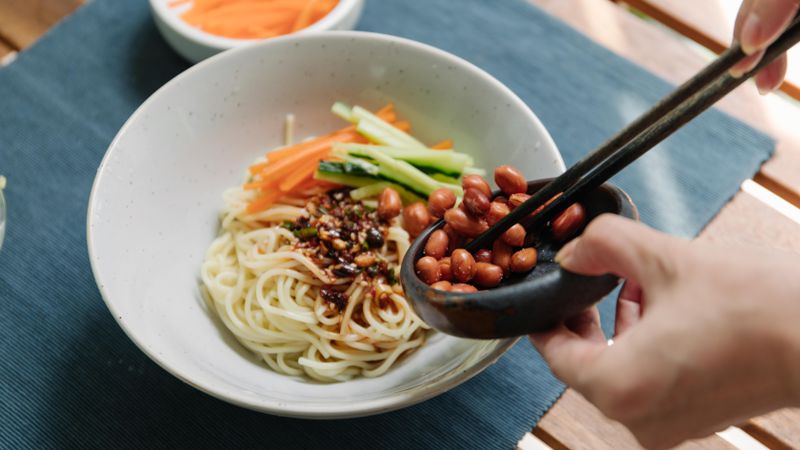
Short answer: Cook 8 ounces of rice noodles and rinse them under cold water. Whisk peanut butter, tamari, rice vinegar, lime juice, maple syrup, sesame oil, ginger and garlic with hot water into a pourable sauce. Toss it with the noodles, then pile on shredded cabbage, carrot, cucumber, red pepper and edamame. Top with peanuts. It serves 4 in about 25 minutes.
This is a bowl you can eat warm the night you make it or cold from the fridge the next day. The noodles soak up the sauce, and the raw vegetables stay crunchy because they never get cooked. Most of the work is slicing, so it goes fast once the water's on.
Like every recipe here, this one was developed by Michael Gonzales from standard ratios. The full ingredient list, steps and nutrition estimate are in the recipe card below.
What you need
A julienne peeler turns carrots and cucumbers into thin matchsticks in a few seconds, and thin pieces mix into the noodles better than chunky ones. A sharp knife works too; it just takes a few more minutes.
For the noodles, flat rice noodles, the kind sold for pad thai, hold the sauce well and keep the bowl gluten-free if you use tamari. Use a smooth peanut butter whose label lists just peanuts, or peanuts and salt, so you control the sweetness.
What noodles are best for peanut noodles?
Almost any noodle works, so use what you like or have on hand.
| Noodle | Why use it | Cooking tip |
|---|---|---|
| Flat rice noodles | Gluten-free, soak up the sauce, good cold | Follow the package and rinse under cold water so they don't stick |
| Soba (buckwheat) noodles | Nutty flavor | Many brands contain wheat, so check the label if you avoid gluten |
| Whole-wheat spaghetti or linguine | Easy to find, holds up in the fridge | Cook just to al dente |
| Udon | Thick and chewy | Best eaten warm |
Rinsing matters most with rice noodles. They keep cooking from their own heat, and the starch on the surface makes them clump. A quick cold rinse and a drizzle of the sesame oil keep them loose until the sauce goes on.
How do you make peanut sauce for noodles?
Whisk everything except the water first. Peanut butter is thick, so it won't blend smoothly into cold ingredients. Then add hot water a tablespoon at a time until the sauce pours like heavy cream.
Make the sauce a little thinner than you think it should be. The noodles absorb liquid as they sit, and the sauce thickens even more in the fridge.
- Too thick? Whisk in more hot water.
- Too salty? Add more lime juice and a little more peanut butter.
- Want it spicy? Stir in a spoonful of chili garlic sauce or sriracha.
Can you eat peanut noodles cold?
Yes. Cold peanut noodles are a classic, and this bowl was built to work both ways. If you're packing it for lunch, keep the cucumber and herbs separate until you eat it so they stay crisp. Loosen the noodles with a splash of water or lime juice before serving, because the sauce firms up overnight.
How do you make it with fewer ingredients?
The five that carry the flavor are noodles, peanut butter, tamari, lime and one crunchy vegetable. Shredded cabbage or carrots alone will do. Everything else (the ginger, garlic, maple syrup, sesame oil, edamame and herbs) makes it better, but you can leave any of it out.
How do you add more protein?
The edamame and peanuts give each bowl about 18 g of protein by our estimate. To add more, double the edamame, or top each bowl with cubes of baked tofu. Cooked chickpeas also work, and our guide to cooking quinoa, rice, lentils and beans covers making them from scratch.
How long do peanut noodles keep?
Three to four days in a covered container in the fridge. That's the window USDA's Food Safety and Inspection Service gives for refrigerated leftovers, and FSIS also says to get them into the fridge within 2 hours [2].
Allergy note: this recipe contains peanuts, soy (tamari and edamame) and sesame (sesame oil). All three are among the nine major food allergens in the U.S., FDA says, along with wheat if you use soy sauce or wheat noodles [3].
What to serve with peanut noodles
They're a full meal on their own. For more plant-based dinners, try our chickpea curry with coconut milk or vegan black bean chili. There are more ideas on our dinner recipes and lunch recipes pages.
Nutrition estimate
One serving (a quarter of the recipe) comes out to about 530 calories, 18 g protein, 22 g fat, 71 g carbohydrate, 8 g fiber, 12 g sugar and 900 mg sodium. We worked that out from USDA FoodData Central values for each ingredient, using dry rice noodles, regular tamari and unsalted peanuts [1].
Most of the sodium comes from the tamari. Using a reduced-sodium tamari or soy sauce brings it down. Check the label on your bottle if you track sodium.
Sources
- U.S. Department of Agriculture, Agricultural Research Service. FoodData Central, SR Legacy: rice noodles, dry (FDC ID 169742); peanut butter, smooth style, without salt (172470); soy sauce made from soy (tamari) (174278); syrups, maple (169661); oil, sesame (171016); lime juice, raw (168156); ginger root, raw (169231); garlic, raw (169230); cabbage, red, raw (169977); carrots, raw (170393); cucumber, with peel, raw (168409); peppers, sweet, red, raw (170108); edamame, frozen, prepared (168411); onions, spring or scallions, raw (170005); coriander (cilantro) leaves, raw (169997); peanuts, dry-roasted, without salt (173806). Accessed October 23, 2026.
- USDA Food Safety and Inspection Service. Leftovers and Food Safety.
- U.S. Food and Drug Administration. Food Allergies.
Photo: Person making food with noodles, vegetables and nuts by zhugewala, via Pexels (Pexels license).
Swaps and substitutions
- Lower sodium: use reduced-sodium tamari, or cut the tamari to 2 tablespoons and add more lime juice.
- Peanut-free: use sunflower seed butter and toasted sunflower seeds instead of peanut butter and peanuts.
- Other noodles: soba or whole-wheat spaghetti work, but check the label if you avoid gluten.
- More protein: double the edamame or add cubes of baked tofu.
- Spicy: whisk 1 to 2 teaspoons of chili garlic sauce into the sauce.
Peanut Noodle Bowl with Crunchy Vegetables
Rice noodles tossed in a gingery peanut-lime sauce and topped with shredded red cabbage, carrot, cucumber, red pepper, edamame and peanuts. Good warm or cold.
By Michael Gonzales
- Prep
- 15 min
- Cook
- 10 min
- Total
- 25 min
- Makes
- 4 bowls
Ingredients
- 8 oz flat rice noodles, dry, the pad thai kind
- ⅓ cup smooth peanut butter, unsalted, label lists just peanuts
- 3 tbsp tamari, labeled gluten-free; reduced-sodium if you like
- 2 tbsp rice vinegar
- 2 tbsp fresh lime juice, about 1 lime, plus wedges to serve
- 1 tbsp maple syrup
- 1 tbsp toasted sesame oil, divided
- 1 tbsp fresh ginger, finely grated
- 1 garlic clove, finely grated
- 3 tbsp hot water, 3 to 4 tablespoons, as needed
- 2 cups red cabbage, thinly shredded
- 2 medium carrots, cut into matchsticks or shredded
- 1 small cucumber, cut into matchsticks
- 1 red bell pepper, thinly sliced
- 1 cup shelled edamame, frozen, cooked and cooled
- 3 scallions, thinly sliced
- ¼ cup fresh cilantro, chopped
- ¼ cup roasted peanuts, unsalted, chopped
Method
- Cook the rice noodles according to the package directions. Drain, rinse under cold water until cool, drain well and toss with 1 teaspoon of the sesame oil so they don't stick.
- Cook the frozen edamame according to the package directions, then rinse under cold water and drain.
- In a large bowl, whisk the peanut butter, tamari, rice vinegar, lime juice, maple syrup, remaining sesame oil, ginger and garlic until smooth and thick.
- Whisk in the hot water 1 tablespoon at a time until the sauce pours like heavy cream.
- Add the noodles to the sauce and toss until every strand is coated.
- Divide the noodles among 4 bowls. Top with the cabbage, carrots, cucumber, bell pepper and edamame, then the scallions, cilantro and chopped peanuts. Serve with lime wedges, and toss everything together at the table.
Food safety and storage
- Contains peanuts, soy and sesame, which are among the nine major food allergens in the U.S. Use a tamari labeled gluten-free if you avoid gluten.
- Refrigerate leftovers in a covered container within 2 hours.
- We'd eat them within 3 to 4 days, the window USDA gives for refrigerated leftovers.
Nutrition per serving (estimate)
530 kcal · protein 18 g · carbs 71 g · fiber 8 g · fat 22 g · sugars 12 g · sodium 900 mg
Estimate from USDA FoodData Central (SR Legacy) values for each ingredient. Values change with brands and portion sizes.
Frequently asked questions
What noodles are best for peanut noodles?
Flat rice noodles, the kind sold for pad thai, are a good pick because they soak up the sauce and stay pleasant cold. Soba, whole-wheat spaghetti and udon also work. Many soba brands contain wheat, so check the label if you avoid gluten.
Can you eat peanut noodles cold?
Yes. This bowl works warm or straight from the fridge. The sauce firms up overnight, so loosen the noodles with a splash of water or lime juice before you eat them.
How long do peanut noodles last in the fridge?
Three to four days in a covered container. That's USDA's guidance for refrigerated leftovers. Get them into the fridge within 2 hours of cooking.
How do you thin peanut sauce?
Whisk in hot water a tablespoon at a time until it pours like heavy cream. Make it a little thinner than you want, because the noodles absorb some of it as they sit.
Can you make peanut noodles without peanuts?
Yes. Use sunflower seed butter in the sauce and toasted sunflower seeds on top. The rest of the recipe stays the same. The sauce still has soy and sesame, so check with anyone who has food allergies.

Written by
Michael Gonzales
Health & fitness consultant
Michael has a diverse set of skills and passions, with a full-time career as an airline pilot and a dedicated focus on health and fitness consulting. He understands the importance of balancing a busy lifestyle with maintaining a healthy mind and body, and is committed to helping others achieve the same success. Michael's expertise in health and fitness is not just limited to physical training, but also extends to nutrition, stress management, and overall wellbeing. He takes a holistic approach to health and fitness, helping clients to achieve their goals in a sustainable and fulfilling way. With a strong desire to inspire and motivate others, Michael is always ready to share his time and knowledge with those who seek his guidance. Whether in the air or on the ground, Michael is dedicated to helping others live their best lives.